Four more on their way. Two are bringing a friend.
I host big game nights. Invitations go to 14 people (on a good month), 9 confirm, 11 show up. One leaves before 9, and two arrive as we deal the second round (which, depending on the game, is either seamless or actively disruptive). I've come to accept that planning the perfect game night is impossible, but we can certainly do our best.
I've tried to write down my game plan for how I deal with these sessions, so hopefully it can help you and your buds.
Broadly, I do a few things:
- Pick a small set of games matched to how many people I think will be there (duh), with some headroom. I call this "prepping my ladder".
- My invites have two start times
- I have a clear plan for splitting the room into groups
- I always have a few player-count-agnostic games in my back pocket
Prep your ladder
14 people accepted your invite. But that means you'll have anywhere between 10-18 actually show up (*true numbers depend on how flaky your friends are). Hence, you wanna have games that fit a few different situations (a ladder of options!)
So prep this before anyone arrives (ideally the night before, when you can think without a room full of people staring at you) and you'll stop freaking out every time someone joins or leaves.
Players | Options |
|---|---|
6 | Just One, Codenames, Fishbowl, Wavelength. I always put the shortest game first if more arrivals are still expected. |
8 | Fishbowl, Wavelength, Telestrations, Herd Mentality. 8 is the practical cap for Codenames and the hard cap for Spaceteam. |
10-12 | Fishbowl, Wavelength, Telestrations, Herd Mentality. At this point we might be splitting into smaller groups, say two tables of five, or two of six with a shared finish time. |
You also have some games like Blood on the Clocktower, which would fit at any of these counts, but only with an experienced, committed Storyteller (maybe you!) who knows the game cold.
You can also use the game catalog to filter by exact player number.
The ladder is not a schedule. The point is to give you an answer for whatever number walks in (without reopening the planning conversation every time the door opens). You can even include it in your invite!

I've come to accept that planning the perfect game night is impossible, but we can certainly do our best.
Two start times in every invitation
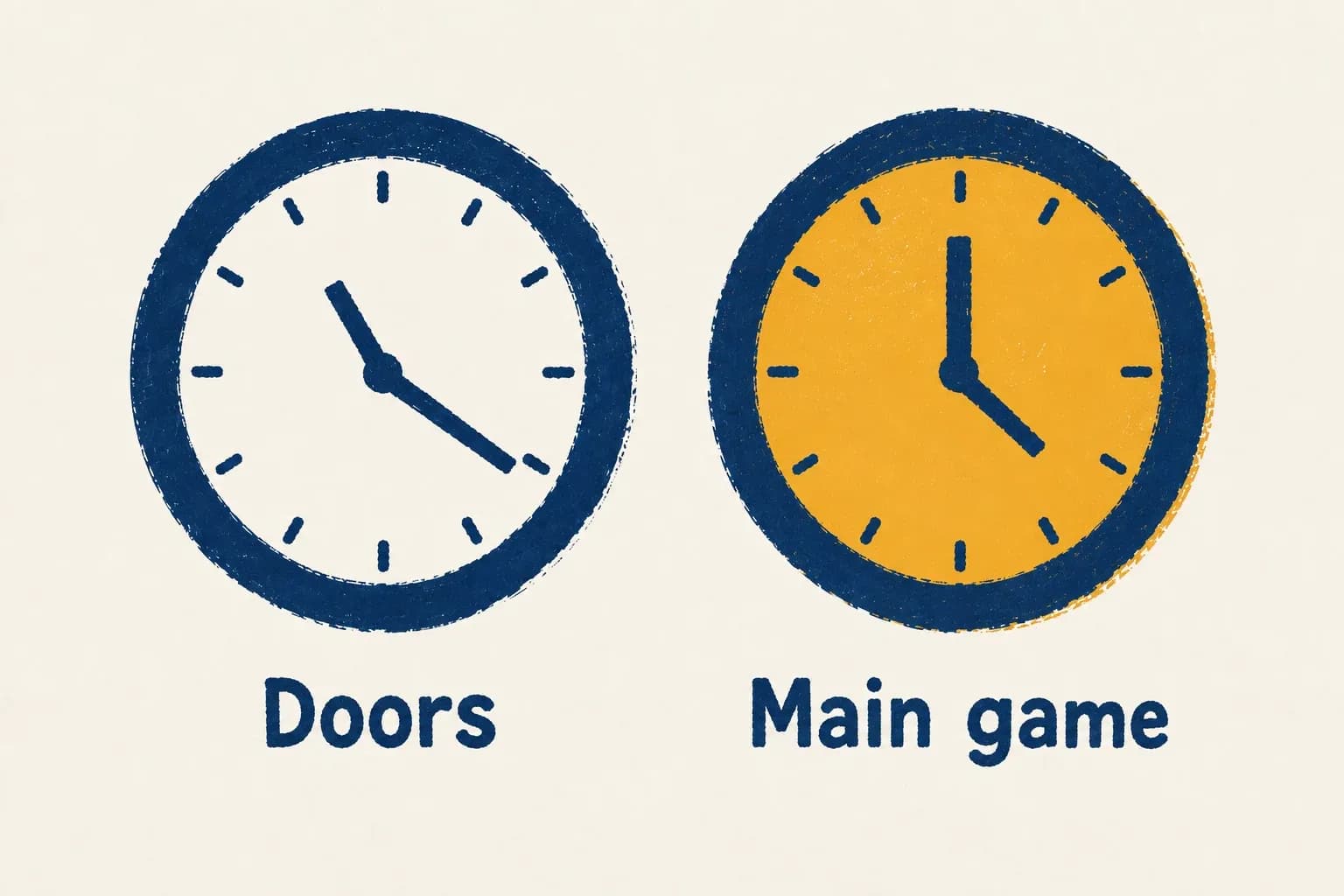
Each invite will have two start-times: Doors (social arrival, coats, food, chitty chatty) and main game (when player count matters and use the ladder). Leave real time between them: say enough for a plate of food and one short round of something easy to abandon.
At main-game time, count the room and pick from the ladder. Don't wait on a "five minutes away" text (it is almost never five minutes, and the people already at the party are already waiting). Late guests join at the next break. The invitation makes this clear:
Doors: [time]
Main game starts: [time]
Late arrivals join at the next round or table reset.
End time: [time]
The end time matters too! Without one, two tables start games of very different lengths and one runs way long while the others awkwardly wait around. We ran into this once and have printed an end time on every invitation since.
Splitting the room
Splitting is a judgment call. For me, I do it when:
- Headcount past the game's player maximum
- A full round leaves several people idle (sitting out and watching is boooring)
- Half the room wants loud performances and half wants conversation (those are two different evenings happening at once)
- One game would need two separate explanations anyway (at that point you are already running two tables, just without admitting it)
- The table cannot hold pieces, elbows, and drinks without a territorial dispute
Before anyone sits, pick one teacher per table (someone who knows setup, the core loop, and the rule people miss most). Split by the kind of evening people want: the louder table and the quieter table (you can usually identify which is which within three minutes of everyone arriving).
Sorting by experience often leaves one table gliding smooth and another being way behind, so I try to avoid that.
Give both tables the same finish time
This is a habit I've picked up most recently. For short party games, I check in at 35 to 45 minutes (set a timer so neither table gets forgotten). The question at that point is whether to continue, swap, or recombine. Let the current round finish first (stopping mid-round upsets even a friendly room). One table must not quietly start a second full game while the other packs up.
Make late arrival boring and easy
Leave a few chairs for late comers, with food and drink available to them so they're not bothering anybody. You should know what is running, when the round ends, and which table absorbs the newcomer. Restart a long game only if that table votes for it; latecomers watching the last eight minutes with a plate of food is a perfectly reasonable thing. Games like Clocktower support the idea of Travellers exactly for late additions.
Pack a backup kit
You should have some backups for when things inevitably go wrong. Have a few pens that work (plus more paper than the rules require), a second timer (or use ours!), and enough flat surface for two simultaneous games.
This is also where the back-pocket games live: for us that is Fishbowl and Gartic Phone. Both stretch across almost any headcount, Fishbowl runs on the same pens and paper the kit already carries, and Gartic Phone just needs the phones people brought anyway.
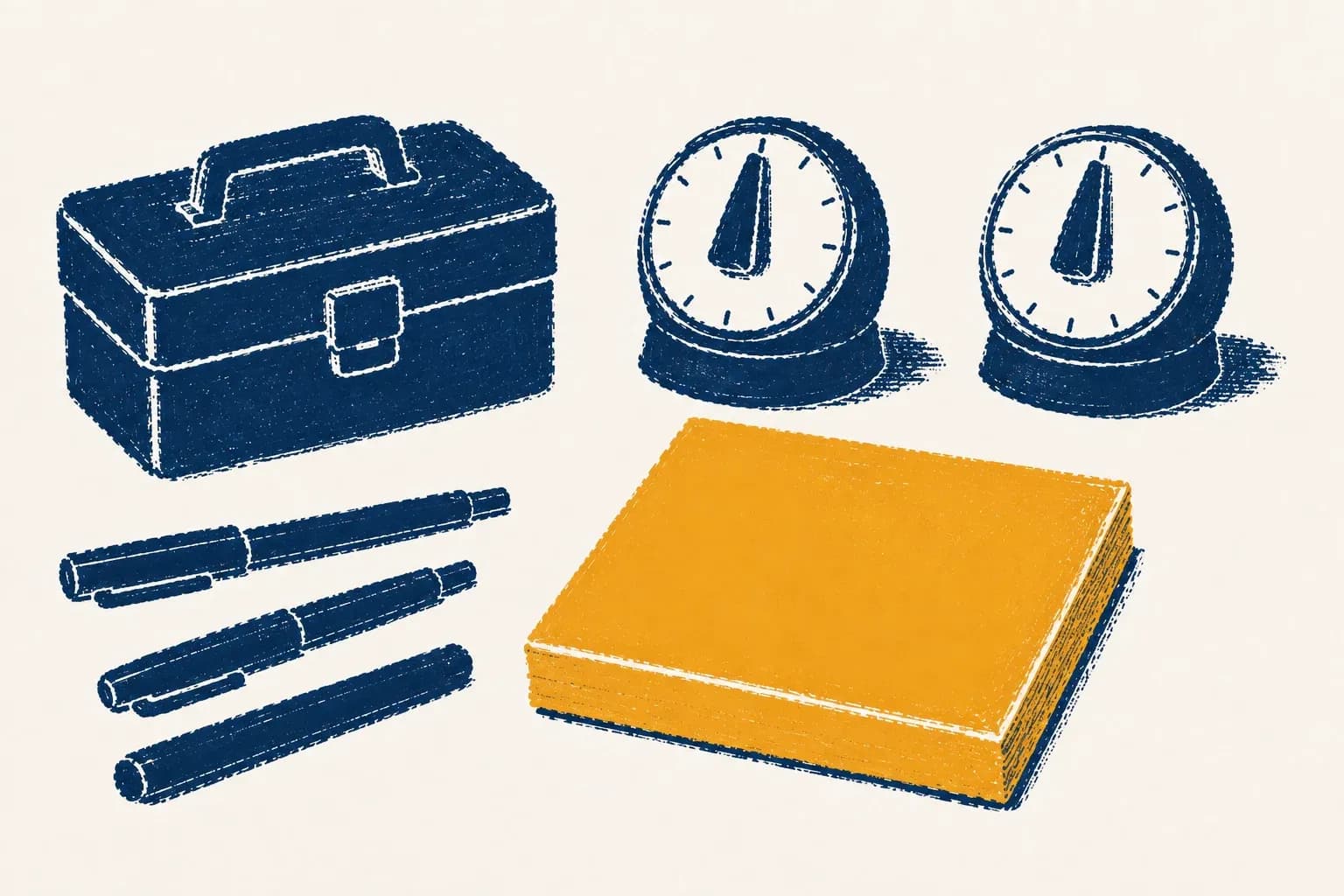
This keeps you from having to stress. When something fails (and something always fails), you hand a pen and a stack of paper to someone else and the night continues.