Two teams, one word grid, and a spymaster whose one-word clues have to connect exactly the right cards without touching the assassin.
- Players
- 4 to 8, two teams
- Where
- one table, or one video call
- Gear
- the box, the free website
- Mood
- brainy, competitive
My partner clued 'ocean' for 'horse'. We have been together nine years.
einarHow to play, in 60 seconds
- Goal
- Be the first team to identify every agent belonging to your color without choosing the assassin.
- Set up
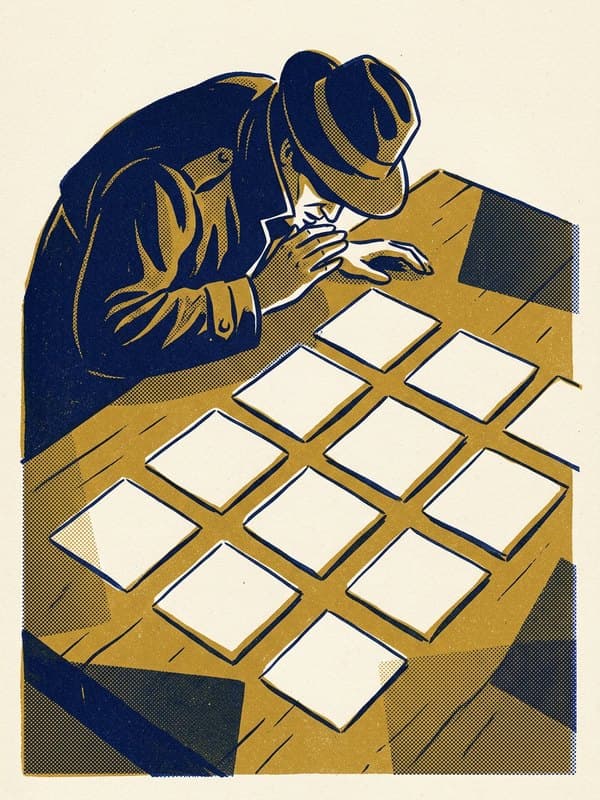
- Split into red and blue teams and choose one spymaster per team. Lay out 25 words in a 5-by-5 grid; only the spymasters see the key showing each team's agents, the bystanders, and the assassin.
- Play
- The active spymaster gives exactly one word and one number. Teammates touch words one at a time; a correct agent lets them continue, while a bystander or opposing agent ends the turn. They may make up to the clue number plus one guesses.
- Finish
- Cover all of your agents to win. Touching the assassin ends the game immediately and makes your team lose.
- Easy to miss
- A clue cannot point to board position or a codename's spelling, letters, or visible form; letters and numbers are allowed when they refer to meaning. After one guess, teammates may stop instead of using every allowed guess.
Rules source Codenames: Official How to Play, checked July 29, 2026
Teach it aloud opens full screen: five lines, one at a time, then a one-minute practice turn nobody scores.
The spymaster says…
OCEAN, for two
Every clue is obvious to exactly one person, and the rules require that person to sit there in silence while the rest of you get it wrong.
One word, and the assassin
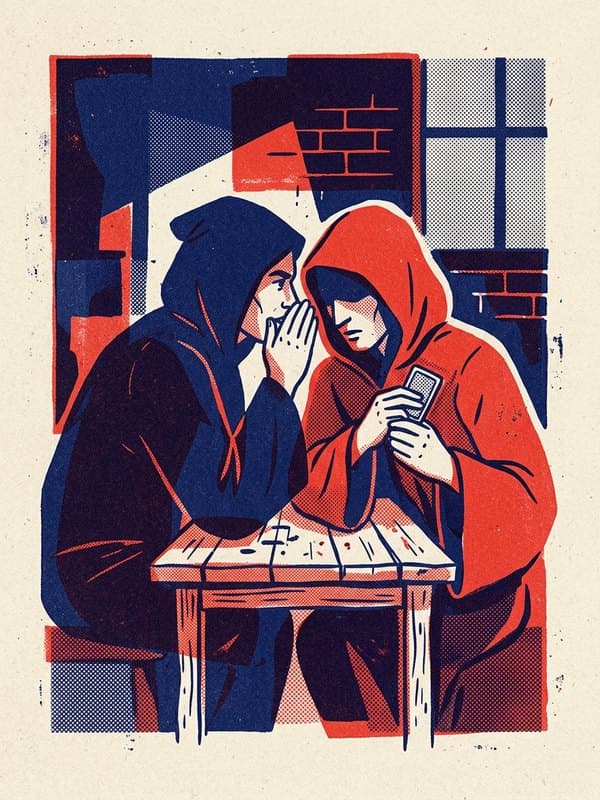
Each team has a spymaster who can see which words belong to each side. On a turn, the spymaster gives one word and a number: "OCEAN, two." Teammates use that clue to choose the right cards without touching the other team's words, the bystanders, or the assassin. Touching the assassin ends the game immediately.
Success depends on predicting how your teammates connect words. A clue that felt obvious in your head can send them somewhere upsetting. A group whose players already read one another can finish in fifteen minutes; the game runs longer once everyone starts overthinking clues that looked easy. For us, that is also when it gets funnier.
Check what the clue hits by accident
Before giving a clue, check every word it might reach. Start with the assassin, then the other team's words and the bystanders. A sturdy clue for two beats an ingenious clue for three if the latter also describes the assassin.
Operatives should explain their reasoning before touching a card and stop when the next guess feels weak. The extra allowed guess is optional. We have seen the first clue, "obviously," send a team straight to the assassin.
Protect the first clue
Before play, give one clean example of the clue rule. If a spymaster is unsure, they can ask the opposing spymaster privately. After an invalid clue, the opposing spymaster may waive the penalty when no harm was done. Otherwise the turn ends with no guesses, and they may cover one of their own agents. Make one ruling and return to the grid.
With four players, Codenames becomes a tight exchange between a spymaster and one guesser on each team. With six to eight players, teammates lobby for competing interpretations, but the final choice still belongs to one hand. Someone may notice the dangerous word just before that happens. That is the version we keep. Have the team name its two strongest candidates before anybody touches the grid. Reaching early cuts off the discussion and may end the game.
The browser version works over distance, but only the operatives discuss the clue. A spymaster who sighs, laughs, or says "interesting" has given a second clue.
From the table
“We hit the assassin on the first clue of the night. The clue was 'obviously'.”
maya
“The free website means the spymaster can be in another country. It does not mean the spymaster can be understood.”
rosa